Showing posts with label Michelangelo. Show all posts

Sunday, March 13, 2016

Food and Wine for Easter

wine and food of Etruria
Easter is only a few weeks away and  here in central Italy, in the province of Viterbo, people are already putting together guest lists and menus for  Easter lunch and, just as important, for  Pasquetta  or  Easter Monday, traditionally the first country outing of the season.

modern and ancient architecture 
Today we visited two   food and wine presentations in Viterbo to try and buy traditional  Easter food products: "Arte e Vino al Museo"   held in the Museo del Colle del Duomo, Viterbo's main cathedral.


Georgia and Elena of Archeoares with Passepartout card

Archeoares, the group that manages the Museum, and  Symposium wine shop organized an itinerary through the museum with stops for tasting four different wines.
blessing the wine
         
Young  servers poured and described  the products  from the Ciucci  biological wine estate  in nearby Orte. 


A pleasant and intelligent way to make the museum come alive  while  promoting the area's excellent products;  visitors happily sipped wine and  munched on delicious pizza bianca as they enjoyed a stroll  through the Museum's two floors surrounded by works of art including Etruscan sarcophaghi, gold liturgical cups and even a Crucifixion  attributed to Michelangelo. 
Crucifixion attributed to Michelangelo


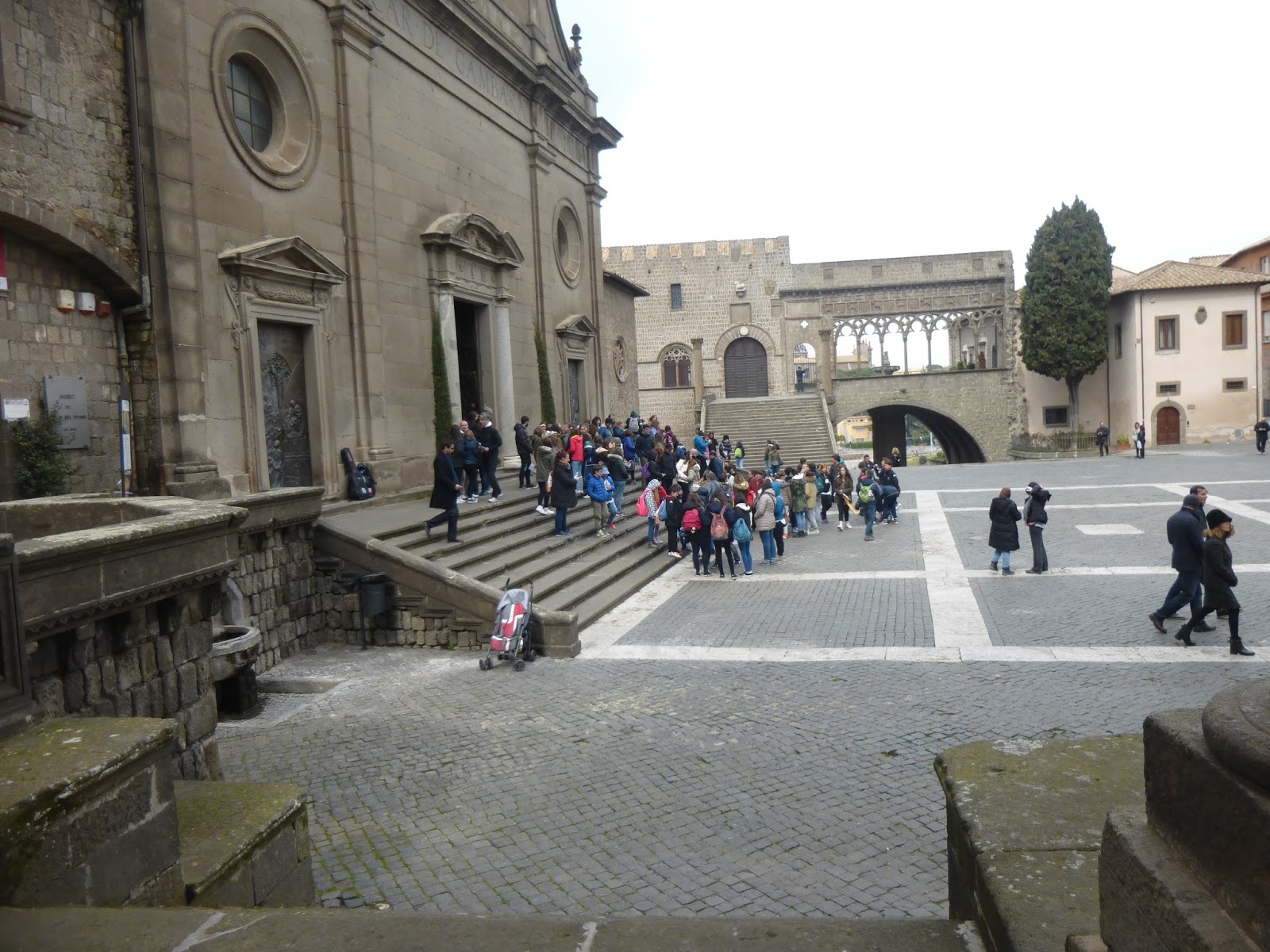
the Duomo  and  Papal Palace loggia

Although it was a cold, windy day we noticed  a buzz  of activity and  positive vibes with  groups  of tourists, new shops  and new  B&Bs as we walked from the Duomo to  the Corso.


Inside the former Church of S. Egidio, Confartiginato had also organized  a 3 day  exhibit/market of traditional Easter foods "Degustando la Pasqua" .
ricotta  hearts


Anna and Dario from Montefiascone

A dozen producers of local cheeses, wines, olive oil, breads and pizze di Pasqua  showed off their wares offering samples, making shopping for traditional Easter foods  both easy and fun...and nobody even thought about  lunch!  

Il Casaletto from Grotte Santo Stefano
a traditional frittata,  for Pasquetta


 Don't forget to check my award winning website  for more information about the Etruria/Tuscia area and Rome: festivals, food, places to stay, books, presentations, happenings and much more.
Please share with friends and on social media by clicking on the icons below.  Your comments are welcome.


Monday, December 23, 2013

Christmas in Viterbo with Sebastiano del Piombo

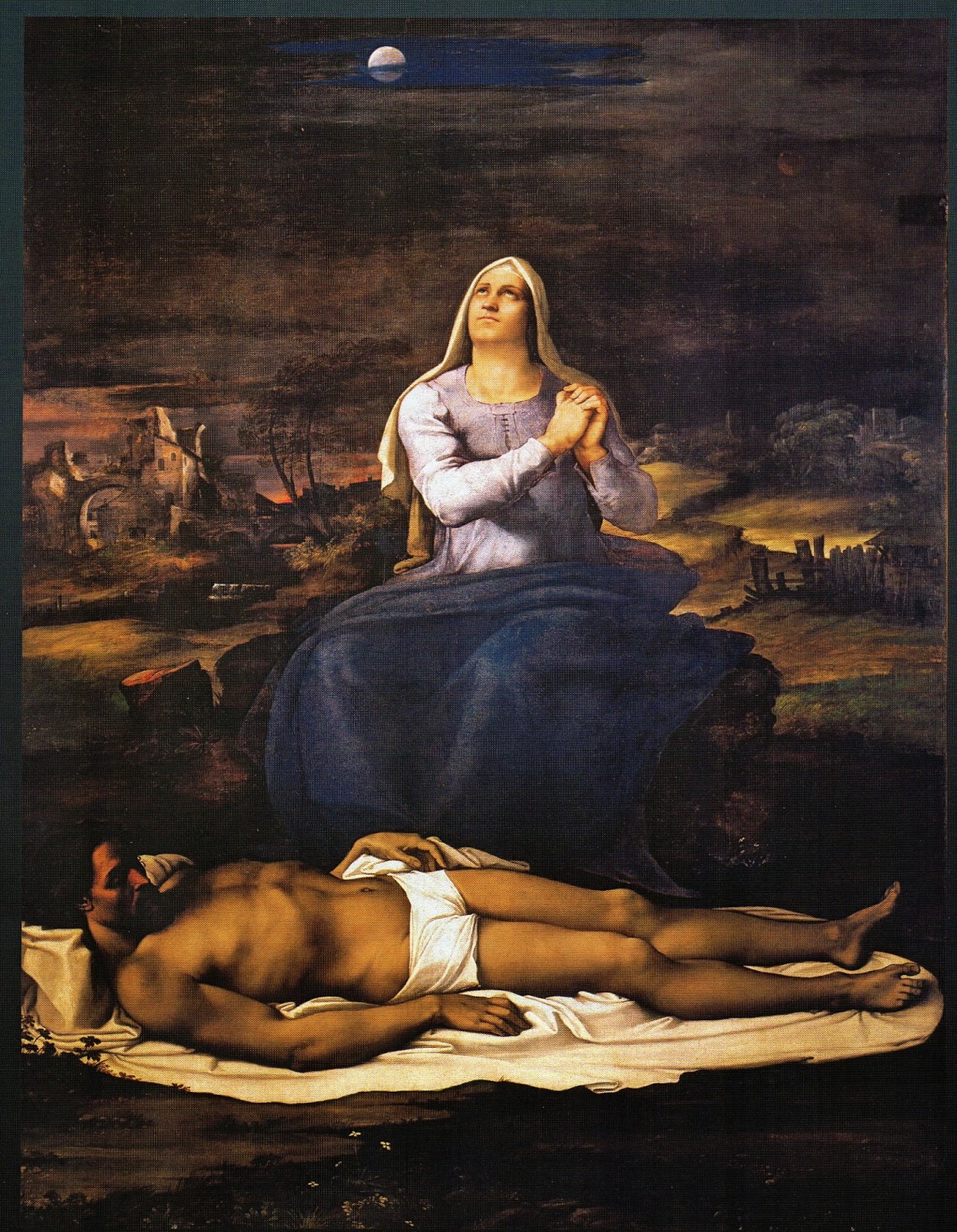
Another reason to visit the city of Viterbo during the Christmas -New Year's period is the  special exhibit of two enormous  Sebastiano del Piombo  paintings. 
The exhibit is open daily until  7 p.m.  free of charge and is a good chance  to  see the  interior of the   magnificent Palazzo dei Priori with its frescoed rooms.  The paintings  are usually kept in the city's Civic Museum  which has been closed  for over a year now due to structural problems. 
La Pietà 

The nocturnal Pietà  was painted  between 1513 and 1516 following designs  by Michelangelo who also did the   carboncino sketches, a face and a full figure, visible on the painting's retro. 
In the background  are the hot baths  that Viterbo was (and still is)  known for . 
The masculine  Madonna  is probably  one of the  most unusual  portraits of Mary  ever done. The painting  is full of esoteric, mysterious   symbols  which have been well explained  by Andrea Alessi in his  book Dante, Sebastiano e Michelangelo  -L'Inferno nella Pietà di Viterbo  (Electa, 2007).


The Flagellation 
The Flagellation  of Christ, completed by Sebastiano del Piombo  in 1525, was also comissioned by Giovanni Botonti for  a church of Viterbo and also  based on sketches of Michelangelo who did a similar one for the chapel of San Pietro in Montorio in Rome.  


Palazzo dei Priori, Viterbo's city hall
entrance  to the City Hall's Sala Regia 
The entrance to the  exhibit is  through this doorway. Note the coat of arms of Pope Julius II  della Rovere, the reigning pope  under whom Michelangelo and Sebastiano del Piombo  both worked.   

As you go up to the main floor, piano nobile,  you will be able to visit the palazzo's  former chapel,  which until now has been  closed to the public. 


 It  has beautiful stucco work, gilded ceilings and frescoes.  The model of Santa Rosa,  set up in the center of the room, is the pinnacle of the Macchina di Santa Rosa.
There are several blog posts  to help you  find out more about  Santa Rosa and Viterbo,  just use the search  bar at the top of the blog page. 


frescoed  chapel 

Santa Rosa  statue 


Comments  are welcome. Feel free to share with friends  by using  the  Facebook  and Twitter buttons  or email. Don't forget  to  "Like " with the G+  button. 


Sunday, July 22, 2012

The 1512 Vetralla Monument


On Saturday, July  21st  while showing a visitor from Scotland our town’s claim to English protection, I realized the  monument  was celebrating its 500th anniversary-and no one in town was interested…except us.
500 years of  English protection  


detail of  Henry VIII's coat of arms 

 Five centuries may seem like a long time, but  not in the layer cake of  European history  and not in an area where Etruscan tombs and sanctuaries dating from 800-300 BC dot the landscape.   

detail of Cardinal Bainbridge's coat of arms 
The year  1512 was a very busy one. Among the happenings in Europe:   
- the battle of Ravenna on   April 11th
- Pope  Julius II  opened  the Lateran Council in May
- Michelangelo’s  Sistine Chapel paintings were  publically shown for the first time in November
Holbein's portrait of Henry VIII 
- a baby named Anne Boleyn was born
-Niccolò Macchiavelli was expelled  from Florence by the Medici, newly returned  to power.
- Martin Luther was named  Doctor of Theology in Wittenberg.

In the new world the Spanish began importing black slaves to Hispaniola to replace the  local Indians  who were perishing at an alarming rate while along the coast of Newfoundland, European fishermen began exploiting the banks of cod fish, sending  the dried cod  back to Europe.

English ambassador visits Vetralla
 On July  20th, 1512 Pope Julius II donated the Castle of  Vetralla, an  important post  between Rome, the papal port of Civitavecchia and the city of Viterbo,  to the English crown. 
Cardinal  Christopher Bainbridge, Henry VIII's ambassador to Rome during those years and the only English prelate at the opening of the 5th Lateran Council, accepted  for his king. 


funerary monument of Cardinal Bainbridge, Venerable English College,Rome 
  In Vetralla, a sculpted marble monument and a smaller plaque with the date were set above the main portal of  the castle, thus sealing the alliance between  young Henry VIII and the Papacy in  the Cambrian League  against the French.
axes and squirrels feature on Bainbridge  coat of arms

 For the first time, Henry laid claim to some  French land, thus the title  King of  France  (REX FR) was included in the  inscription  of the Vetralla monument. 
Over the centuries  the heraldic  plaque was moved several times  and since the 1700s it has graced the  main staircase of the governor’s palace, now the City Hall.  
A few years ago volunteers cleaned the monument revealing the full beauty of its  heraldic motifs. Several coins  from the early  19th century were found lodged  among the intricate carvings.

Andrea Natali  cleaning the  1512 English monument 
 Unfortunately no documents  concerning the monument have yet come to light and most of the local population continue to ignore its significance and its very existence.

 This post is part of my submission for Team Florens, a meeting to be held in  autumn  where themes such as boosting economy through cultural awareness will be debated. 

Hopefully local cultural identity can grow and use existing historical monuments, especially those with international connections like the Vetralla 1512 monument, to create opportunities for tourism  in  towns not on regular tourist circuits.  Learn more about Fondazione Florens here.     

Latest  visitors   to Vetralla from England were a group  of young university students who had cycled all the  way  from Manchester, through  Holland, France and northern Italy. They were amazed  at the English connections  we pointed out to them.

posing  beneath the English monument  and
the bust of Cardinal Henry Stuart, Duke of
York, protector of  Vetralla