We all recognize this Risorgimento character on the left....
...but who was this ?
If you want to learn more about the Risorgimento, especially the little-known international aspects of Italy's unification movement, this is a book for you.
Until now the stories of the 1000 Irish volunteers of the St. Patrick's Brigade who fought for the Pope and the 1000 English excursionists who sailed to Italy to fight with Garibaldi were forgotten episodes of the Risorgimento.
"The Irish and English in Italy's Risorgimento" now available in a limited edition of 200 numbered copies , promises to become a collectors' item.
Thanks to research spanning several decades I have been able to unearth documents and information on the process that prompted Irish and English volunteers to risk their positions and lives to fight in the Risorgimento battles of far-away Italy.
Contents include confidential letters, diaries and secret documents regarding the Irish and English who volunteered to fight in battles on Italian soil in 1860.
There are chapters on the foreign brigades, attitudes towards the papacy, volunteers' culture shock, spies, scandals, propaganda, the English -and Irish- who volunteered for Garibaldi, missing medals, caricatures, scandals and doubles, sailing for Sicily, correspondents, poetry, music and the volunteer movement, lists of Irish soldiers.
180 pages, index, maps, bibliography, 10 pages of images and portraits.
Order directly from the author macryan@alice.it and pay with paypal. Cost 15 euros plus postage.
For the e-book format contact www.edizioniarcheoares.it .
Lifestyle, stories, travel, itineraries in and around Rome, central Italy, cruises in Mediterranean. Study abroad, writers, food, antiques, culture, books.
Thursday, March 24, 2011
Sunday, March 13, 2011
The Wisdom of Tuscany by Ferenc Maté
In his latest book Ferenc Maté gives an intimate look into life in the Tuscan countryside and why it should be a model for sustainable living in our global world.
He also gives some pointers on how this can be achieved..even if you don't happen to live, as he and his family do, in a beautifully restored ancient Tuscan villa surrounded by vineyards.
With humor and personal tidbits about his early life in Hungary, growing up in Canada and as a world traveler, Maté explains that it is not the quantity of stuff, the size of house,car or boat, but the little things and personal connections that make life satisfying.
His musings on the importance of neighbors, freedom of children to grow up in a healthy society, the ability to find satisfaction and magic in small simple things all strike true notes.
A good read from cover to cover, the book can also be opened at random for a daily dose of Tuscan wisdom. It is almost like sitting down with Ferenc for a chat over a glass of vino - which he mentions often, since he and his wife Candace produce one of Montalcino's wonderful wines.
The Wisdom of Tuscany is not a romp through the luscious Tuscan landscape and lifestyle, it goes beyond the pretty prose that fills travel books and Hollywood films. Nor is his prose anything like that of "instant" writers who blog about their golden expat lifestyle.
As a long time resident I found some of the book's observations obvious, almost hackneyed. But then I realized that Maté's target audience is made up of the thousands of wishful North Americans who live in mega-cities and bland suburbs. It is easy to forget how different things are "over there" for we do get used to wine at meals and freshly baked bread every day. After a few decades we take these things, and our extra virgin olive oil, quite for granted forgetting that these are considered luxuries outside of Italy.
Ferenc must have kept dedicated diaries of his first impressions for his narration creates images that roll easily off the keyboard. His style is witty and the language similar to that of Polish-born novelist Conrad, who, like Maté , wrote in his second language -English.
Wisdom of Tuscany ends with a selection of simple recipes by family friend Pino Luongo; basic foods to be enjoyed with family and friends gathered in the kitchen and of course, a glass of Maté's Montalcino.
Next month I hope to showcase another writer who escaped the big city to follow a simpler, but tougher, lifestyle. I already have a few in mind, but readers' suggestions are welcome.
He also gives some pointers on how this can be achieved..even if you don't happen to live, as he and his family do, in a beautifully restored ancient Tuscan villa surrounded by vineyards.
With humor and personal tidbits about his early life in Hungary, growing up in Canada and as a world traveler, Maté explains that it is not the quantity of stuff, the size of house,car or boat, but the little things and personal connections that make life satisfying.
His musings on the importance of neighbors, freedom of children to grow up in a healthy society, the ability to find satisfaction and magic in small simple things all strike true notes.
A good read from cover to cover, the book can also be opened at random for a daily dose of Tuscan wisdom. It is almost like sitting down with Ferenc for a chat over a glass of vino - which he mentions often, since he and his wife Candace produce one of Montalcino's wonderful wines.
| an ancient convent surrounded by the vineyards |
The Wisdom of Tuscany is not a romp through the luscious Tuscan landscape and lifestyle, it goes beyond the pretty prose that fills travel books and Hollywood films. Nor is his prose anything like that of "instant" writers who blog about their golden expat lifestyle.
The Maté family are year round residents who make a living creating fine wine and books - both difficult tasks that can be backbreaking and lonely. This book is also a hymn to small town safety, the multi-generational family, closeness to nature and quality of life.
As the world gets more global and hectic our sense of isolation increases. The fact that people continue to need each other and stick together as they do in smaller Italian towns is reassuring.
| entrance to the cantina |
Provincial Italy -in any of the 20 regions, not just Tuscany- is not a "golden ghetto" for the elite. Those of us who are permanent residents face problems daily that are very real, problems that a 2-week visitor does not see nor even imagine. Even expats who have trasferred permanently to Italy spend years in the "honeymoon phase" before becoming aware of what really goes on.
In the past few years the rolling landscape of central Italy has been experiencing an invasion of monstrous giant eolica towers of wind farms "planted" on the photogenic hills by unscrupulous speculators who live far away. Some towns have problems with arsenic in the water and we all know of bright young university graduates who have had to emigrate abroad to find decent jobs.
| An interior courtyard |
Ferenc must have kept dedicated diaries of his first impressions for his narration creates images that roll easily off the keyboard. His style is witty and the language similar to that of Polish-born novelist Conrad, who, like Maté , wrote in his second language -English.
| Come in for a glass of wine |
Next month I hope to showcase another writer who escaped the big city to follow a simpler, but tougher, lifestyle. I already have a few in mind, but readers' suggestions are welcome.
Thursday, February 24, 2011
Ireland and Italy share a common celebration
![]() |
| first printed map of Ireland, 1590 |
Over 700 million Irish -and those of Irish descent- scattered in all corners of the globe will be enjoying a long weekend on March 17th full of festivities and parades in honor of St. Patrick’s Day . For the first time Italy will be celebrating the day too, for March 17th has been proclaimed a National Holiday in honor of the country’s 150th anniversary of unification .
Italy and Ireland have shared connections for a long time.
Irish pilgrims, saints and scholars gravitated toward Rome while legend tells us that even the patron saint of Ireland -Patrick-was originally from Italy. In the ancient basilica of St. Stefano Rotondo set in the quiet of Rome’s Caelian hill there are curved
walls frescoed with gory scenes of martyrdom and also a plaque
commemorating Brian Boru’s son, King Donnchadh of Munster,
who died during a pilgrimage to Rome and was buried here in 1064.
Monumental graves in front of the altar of St. Pietro in Montorio
on the Janiculum are testament to a group of exiled Irish Earls
led by Hugh O’Neill who fled to Rome in 1607.
Irish pilgrims, saints and scholars gravitated toward Rome while legend tells us that even the patron saint of Ireland -Patrick-was originally from Italy. In the ancient basilica of St. Stefano Rotondo set in the quiet of Rome’s Caelian hill there are curved
walls frescoed with gory scenes of martyrdom and also a plaque
commemorating Brian Boru’s son, King Donnchadh of Munster,
who died during a pilgrimage to Rome and was buried here in 1064.
Monumental graves in front of the altar of St. Pietro in Montorio
on the Janiculum are testament to a group of exiled Irish Earls
led by Hugh O’Neill who fled to Rome in 1607.
![]() |
| model St. Patrick's Brigade uniform 1860 |
The first printed map of Ireland appeared in “Le Isole piu famose del mondo” in 1590 where Venetian cartographer Tommaso Porcacchi showed Hibernia laying on its side. In the 18th and 19th centuries many Italians migrated to Ireland including Charles
Bianconi who organized an entire transport system for Ireland
including coaches which crisscrossed the country and a system
of postal stations, inns and mail delivery. Even today Bianconi
Inns can be found in smaller Irish towns .
Among the Irish saints and scholars who were regularly “exported” to Italy many left indelible marks on the Eternal City . One was Franciscan Luke Wadding who set up St. Isidore’s Church and the Irish College. Dominican priest Joseph Mullooly excavated under San Clemente‘s Cosmastesque pavements to find an earlier 4th century church and, on a still lower level, a pagan Mithraic temple and Roman houses. Besides being an amateur archaeologist, Mullooly was also an important figure in a little-known chapter of the Risorgimento which gives Irish and Italians a common reason for
celebrating this March 17.
![]() |
| Pope Pius IX |
In 1860 along with Paul Cullen, head of the Irish College in
Rome, Mullooly was the mediator between Austro-Irish officers
and the papal government for the formation of the St. Patrick’s
Irish Brigade. Prior to 1860 Pius IX and his counsellors had
doubts concerning the enlistment of Irish soldiers to defend
Papal territory.
Rome, Mullooly was the mediator between Austro-Irish officers
and the papal government for the formation of the St. Patrick’s
Irish Brigade. Prior to 1860 Pius IX and his counsellors had
doubts concerning the enlistment of Irish soldiers to defend
Papal territory.
But by January 1860 Pius IX had changed his mind due to the seriousness of the situation in central Italy and sent Count Charles MacDonnell,an Austrian officer of Irish descent, to Dublin to organize the volunteer movement.
During the summer of 1860 over 1,000 Irish volunteers travelled from Ireland to Italy where they participated in the battles of Spoleto, Castelfidardo, Ancona and Perugia.
Fighting valiantly against enormous odds they wrote a short but glorious chapter in the history of the Italian Risorgimento to be remembered during this year’s Unification celebrations .
You can order a copy of my book on this subject directly ...there are less than 100 copies left.
.
Tuesday, February 22, 2011
Vetralla’s Carnevale – ItalianNotebook.com
Since this Sunday February 27 will be the first of the Carnival parades here in Vetralla, here is the story I wrote about last year's parade which featured the Simpsons and some satirical floats about Italian politics.
Little has changed in a year, so take a look at
Vetralla’s Carnevale – ItalianNotebook.com
We are expecting some American students from the Viterbo USAC program to join in the festivities. Who else is coming ?
For the entire Carnivale program check http://www.prolocovetralla.it/Pro-Loco/programmacarnevale2011.htm
The parade starts at 3 p.m. and includes giant floats and hundreds of costumed revelers . If you want to come earlier to explore the picturesque medieval streets and have lunch, I recommend La Lanterna a family-run trattoria right in the historic center on the parade route.
Little has changed in a year, so take a look at
Vetralla’s Carnevale – ItalianNotebook.com
We are expecting some American students from the Viterbo USAC program to join in the festivities. Who else is coming ?
For the entire Carnivale program check http://www.prolocovetralla.it/Pro-Loco/programmacarnevale2011.htm
The parade starts at 3 p.m. and includes giant floats and hundreds of costumed revelers . If you want to come earlier to explore the picturesque medieval streets and have lunch, I recommend La Lanterna a family-run trattoria right in the historic center on the parade route.
Friday, February 18, 2011
Carnevale in Northern Lazio
How many of my former students at Rome's international schools remember how mid-winter doldrums were broken up by "snow week" or "art week"?
Here in Northern Lazio, formerly the Papal States, winter is enlivened with Carnevale festivities, an important part of the annual cycle of festivals. Not only kids, but also adults need an excuse to break down barriers with noisy costume parades, masked balls and general merriment.
At Ronciglione, 50 kms. from Rome, there are several weeks of mid-winter madness where one can relive the excitement-including riderless horse races-that Charles Dickens described in his 1846 description of the Roman carnival season. (update for p. 116 in my latest book "Etruria".)
Italy's best known carnivals include the recently revived (and expensive!) masked balls of Venice and the famous Viareggio carnival parade with giant floats that are the envy of Rio's carnival.
This year you can enjoy a Venetian-style Ballo in Maschera in the glamorous mirrored saloni of Palazzo Monaldeschi close to Viterbo www.monaldeschi.it.
For 60 euro Palazzo Monaldeschi and Opera Extravaganza offer dinner, dance and a lively opera show that was the high light of a recent visit by international tour operators.
Save the date-Saturday, March 5th-and contact Susanna at www.operaextravaganza.com for information and bookings.
Here in Northern Lazio, formerly the Papal States, winter is enlivened with Carnevale festivities, an important part of the annual cycle of festivals. Not only kids, but also adults need an excuse to break down barriers with noisy costume parades, masked balls and general merriment.
![]() |
| Venetian style Carnival masks seen at Libreria del Teatro, Viterbo |
At Ronciglione, 50 kms. from Rome, there are several weeks of mid-winter madness where one can relive the excitement-including riderless horse races-that Charles Dickens described in his 1846 description of the Roman carnival season. (update for p. 116 in my latest book "Etruria".)
| Carnival parade in Vetralla |
Italy's best known carnivals include the recently revived (and expensive!) masked balls of Venice and the famous Viareggio carnival parade with giant floats that are the envy of Rio's carnival.
This year you can enjoy a Venetian-style Ballo in Maschera in the glamorous mirrored saloni of Palazzo Monaldeschi close to Viterbo www.monaldeschi.it.
For 60 euro Palazzo Monaldeschi and Opera Extravaganza offer dinner, dance and a lively opera show that was the high light of a recent visit by international tour operators.
Save the date-Saturday, March 5th-and contact Susanna at www.operaextravaganza.com for information and bookings.
Wednesday, February 16, 2011
February-the best time to visit the Vatican Museums
February 20, 2013 Update Pre-Conclave Weeks in Vatican
Don't try to enter Vatican City in the next few weeks, security has been tightened up. If you are going to the Pharmacy, be sure you have a doctor's prescription...or the Swiss Guards, kindly but firmly , will send you away.
February is the best month for visiting museums in Italy, including one in the "foreign country" known as Vatican City State. Vatican has its own money, telephone and postal systems and even license plates like this one on a vehicle parked at the new Museum entrance.
SCV stands for Stato Città Vaticano or as malignant Vatican watchers say, "Se Cristo Vedesse", ("If Christ could only see!").
For years I have put off a nostalgic visit to the Museums due to tourists' tales of endless lines at both St. Peter's Basilica (my former "parish") and the Museums.
Forums are clogged with discussions on the best time of day to attempt a visit and tour agencies and private guides have become wealthy selling "skip the lines" tours.
The photos taken during our visit are evidence that Wednesday mornings in January and February are preferable for a leisurely, in-depth, independent visit.
Most of the visitors to the Vatican on Wednesdays are taking in the Papal Audience in the hall on the other side of the tiny country.
One can get upclose to the works of art, enjoy the frescoes and statuary.
The guards are not hassled and more lenient with the "one-way" rules.
Beyond the spacious atrium where audio guides are available, there are abundant souvenir and book stalls, new coffee shops and a new Vatican Archives shop with replicas of important historical documents.
I noticed letters from Abraham Lincoln, FD Roosevelt and replicas of coins and medals of emperors, kings and saints.
Vatican Archives researcher Barbara Frale, who lives in nearby Orte, found documents explaining the true story of the Templar Knights and the resulting special edition is available here for a mere 6000 euro.
Replica copies on vellum of the documents concerning King Henry VIII's divorce (of the 200 printed, one went to Queen Elizabeth II) are now out of print.
I am proud that the translator of the document used my library to help with her work .
How to avoid cultural indigestion and Stendhal Syndrome? My advice is to pinpoint one or two special places to visit and not try to see everything.
Don't forget to visit my website for more insider tips.
![]() |
| My local museum on a sunny February morning |
February is the best month for visiting museums in Italy, including one in the "foreign country" known as Vatican City State. Vatican has its own money, telephone and postal systems and even license plates like this one on a vehicle parked at the new Museum entrance. SCV stands for Stato Città Vaticano or as malignant Vatican watchers say, "Se Cristo Vedesse", ("If Christ could only see!").
![]() |
| The sun filled atrium, new Museum entrance. Where are the crowds ? |
Forums are clogged with discussions on the best time of day to attempt a visit and tour agencies and private guides have become wealthy selling "skip the lines" tours.
![]() |
| Time and space to enjoy the details |
Most of the visitors to the Vatican on Wednesdays are taking in the Papal Audience in the hall on the other side of the tiny country.
![]() |
| Masterpiece in the outdoor Sculpture courtyard |
![]() |
| Sistine Chapel without crowds: Michelangelo's Last Judgement and ceiling |
![]() |
| Raphael's "School of Athens" with philosopher Ipazia of Alexandria |
Beyond the spacious atrium where audio guides are available, there are abundant souvenir and book stalls, new coffee shops and a new Vatican Archives shop with replicas of important historical documents.
I noticed letters from Abraham Lincoln, FD Roosevelt and replicas of coins and medals of emperors, kings and saints.
![]() |
| Original Papal bull with wax signature seals concerning Henry VIII's divorce |
Vatican Archives researcher Barbara Frale, who lives in nearby Orte, found documents explaining the true story of the Templar Knights and the resulting special edition is available here for a mere 6000 euro.
Replica copies on vellum of the documents concerning King Henry VIII's divorce (of the 200 printed, one went to Queen Elizabeth II) are now out of print.
I am proud that the translator of the document used my library to help with her work .
![]() |
| Signposts show the way to many, varied sections of the Vatican Museums |
Don't forget to visit my website for more insider tips.
Monday, February 14, 2011
Happy St. Valentine's Day
![]() |
| Valentine's getaway in a Castle |
San Valentino is one of the patron saints of Viterbo who was a lst century AD bishop in Terni, just across the Tiber in nearby Umbria.
About 40 years ago, on this day, I was able to visit the catacombs dedicated to San Valentino along with a group of experts from the Pontifical Archeological Commission in charge of martyrs. I remember a spooky, dark catacombs and the fact that I was the only young woman in a group of elderly, priest types.
We were there for a mass said in honor of the saint and martyr as if he had just recently died.
![]() |
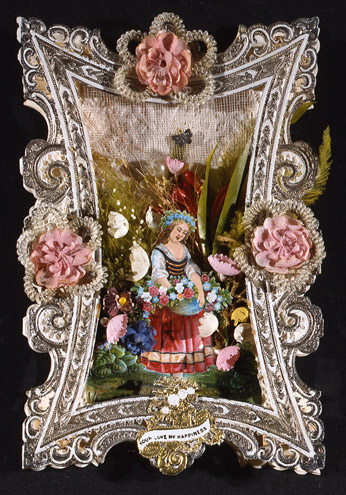
| antique Valentines card |

This year San Valentino sent some magnificent heart-colored sunsets to brighten our Etruscan sky and the local bakery was overflowing with heart shaped torte.
Club organizer, Paula Treu, and I traded copies of our new books which we then presented to club members. Paula's book "I ragazzi del Monticchio" tells the story of a group of adolescents growing up in the Olgiata-Cassia area and is written in Italian.
My book "Etruria", which contains travel and history essays as well as itineraries to prove that "there is civilization beyond Olgiata" was sold out!
Grazie ladies ! It is so important for a writer to actually meet her readers. Let me know how you liked the book. You can leave your comments and reviews here.
Reviews, preface and contents are at my website. and signed copies can be ordered directly from me. Just drop me an email at macryan@alice.it . Postage to Italian addresses is free.
Copies in e-book format to download on your Kindle can be ordered from my publishers .
Subscribe to:
Posts (Atom)