During a series
of cruises along the Adriatic coast I was struck by the beauty and booming tourism in towns of former Yugoslavia, previously part of the great Venetian marine
empire in the 12-18th centuries.
 |
| "living room" of Hvar-the main piazza |
 |
| just like Italy..... pizza break in lively Koper |
The
fortified ports of Zadar, Koper,
Dubrovnik, Kotor and Hvar strung out
along the Adriatic coast are now some of the hottest spots for summer tourism.
Each has its unique
character, history and structure but
they also share lifestyles
and traditions similar to those found here, in central Italy. For example, the use
of the main piazza as the town’s
elegant living room for the
afternoon passeggiata.
 |
| artisans in Zadar offer their wares on the street |
 |
| costumed locals in Koper/Capodistria |
By studying what our neighbors on the Adriatic are doing -and
have done- in the tourism field, we can discover which mistakes to avoid and which of their best practices to follow. Here are some personal observations and ideas to help increase tourism while protecting the
quality of life for residents and
visitors.
 |
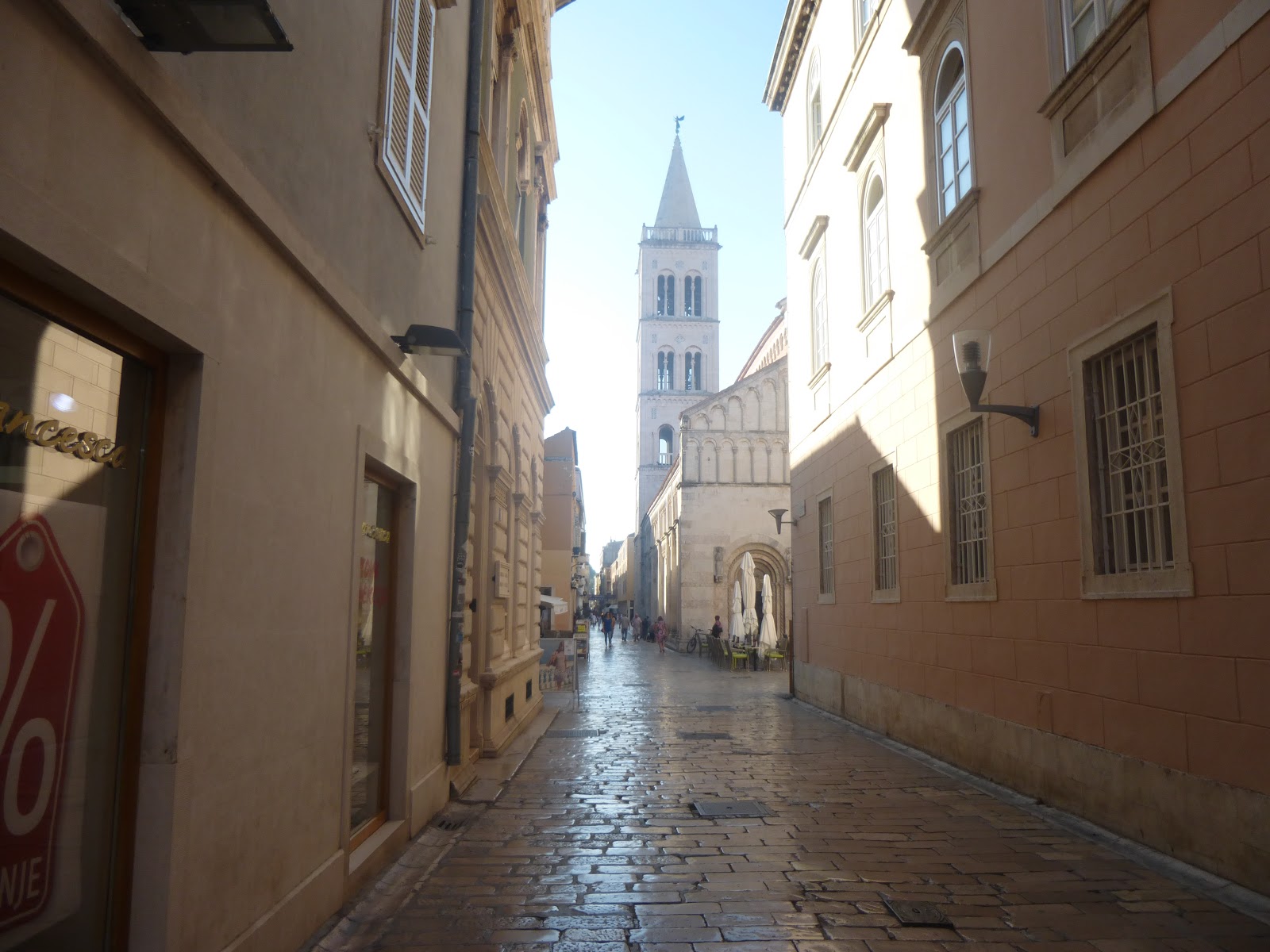
| shiny stone pavements of Zadar |
I
noticed that public spaces in all these
lively port towns were decorated with street furniture and flowers and, most importantly, there were no graffiti
nor rubbish to be
seen. This pride in their
spotless main piazzas and
streets- such as Dubrovnik’s Stradun- is expected also from visitors.
The tourism industry must protect this quality of life which is one of the area’s main attractions, a quality
that the Tuscia Viterbese has in
common with these colorful Adriatic
ports.
Too much popularity
and tourist hoards can be a strain on
ancient historic centers. Hvar town, a
very popular party destination for young British tourists, has had to
impose rules of conduct and stiff
fines (up to 700 euro) to
control unruly behavior .
 |
| enjoy your stay and obey the rules |
On the
positive side, thanks to the silent electric
vehicles used for rubbish pick up and deliveries in the pedestrian zones the only noise is the hum of human voices and instrumental music being played at many
a street corner. The piazzas of Dubrovnik , Koper and Zadar resound with classical music played by street performers and buskers
often dressed in local costume.
 |
| musician and salt shop, Koper |
Whether it is a violinist, a guitar trio or Mozart being played on musical glasses, a crowd of people and a pleasant mood are always created.
The huge crowds of rock concerts are relegated to stadiums outside the delicate
historic centers where amplifiers would be
a danger and unnecessary.
In the port of Zadar even the sea has been
harnessed to make music with the recently
created sea organ which plays tunes using the lapping
waves of the sea .
 |
| sea organ, Zadar port |
This human scale combined
with beautiful architecture gives
a sense of peace and wellbeing that immediately strikes visitors
coming from foreign cities. This slower
pace and quality of life are valuable
elements which no longer exist in giant cities and suburban sprawl but are still fortunately alive and well in most towns of central Italy.
What answers
can you give to these questions
about your town?
Is the main
public piazza and/or main street still
an elegant public space used for socialization or is it clogged
with cars, speeding motorini or used
primarily for parking?
Are the
ancient, medieval and Renaissance
architectural gems of the historic
center given pride of place?
 |
| tower in Zadar similar to those of Viterbo |
Are there green areas and
parks close to the historic
center which are well cared for and used by the residents and visitors?
 |
| SYA students relax in Valle Faul, Viterbo |
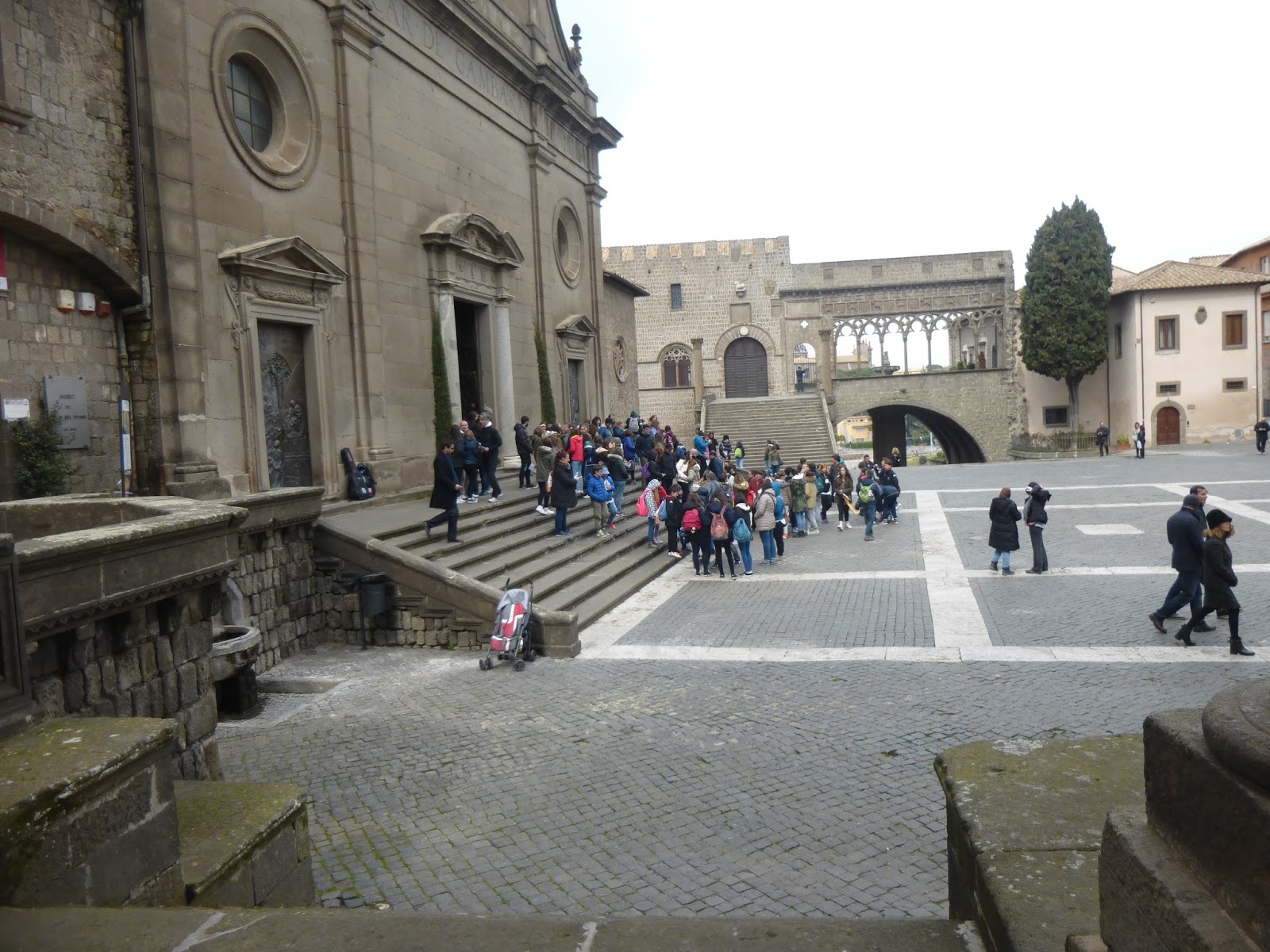
Instead of the Venetian lion seen in all the Adriatic ports, the
area of Tuscia boasts other symbols on palaces and castles: Viterbo’s lion and palm, the heraldic crests that remind us of past Papal domination and the local noble
families -Farnese, Odescalchi, Monaldeschi -who once ruled the area.
The construction materials also differ: our local buildings are
constructed of grey tufa and peperino and we walk on cobblestone streets instead of shiny Istrian stone.
Although less
spectacular than the majestic city walls
surrounding Dubrovnik and
Kotor those of Viterbo, Tarquinia and other local fortified towns have yet to be given the attention they deserve .